
2023 - 2025
Vilhonpaja
Built as part of a team for Aalto University, Vilhonpaja is a production platform that supports prototype-driven teaching through course content, exercises, project publishing, and workshop-related operations. I contributed as a full-stack engineer across both public and authenticated features, with particular focus on the project gallery, course and exercise management, and rich content editing workflows.
Context
Vilhonpaja is a digital platform for Aalto University's School of Electrical Engineering workshop ecosystem. The service supports a hands-on learning environment centered on electronics prototyping, workshop facilities, and student projects. Publicly, the site presents workshop capabilities, facilities, courses, and a gallery of student work. Operationally, the service also supports authenticated workflows such as exercises, tutorials, enrolment, project documentation, reservations, and other course-related activities. The workshop itself serves a large student base, with public materials describing roughly 500-600 students annually and around 300 students per year in its largest workshop course.
Problem
Prototype-driven teaching involved more than publishing static course information. Students needed a clearer path from discovering facilities and courses to learning how to use machinery safely, completing exercises, documenting projects, and publishing outcomes. Existing institutional tools were not a strong fit for this kind of workshop-centered experience: course material, machine onboarding, project documentation, and student showcases were spread across systems with different limitations. The challenge was to create a platform that better matched the operational reality of the workshop while also improving the student experience.
Solution
We built Vilhonpaja as a full-stack web application that combined public discovery with authenticated operational workflows. My own contribution focused on the areas where content structure and user workflows mattered most. I worked on the project gallery to help student work become easier to publish and browse, on course and exercise management to support workshop-based teaching flows, and on integrating TipTap-based editing so staff and contributors could build richer project and exercise content than would be practical in more rigid institutional platforms. On the engineering side, the implementation used a T3-style stack with Next.js, TypeScript, Tailwind CSS, and tRPC, allowing us to keep frontend and backend development closely aligned while supporting more interactive and role-sensitive application behavior. I also contributed to cross-service data management, including communication with other Aalto APIs, which was important for fitting the service into the wider university environment rather than treating it as an isolated product.
Outcome
The clearest outcome is that the platform was proposed, built, accepted, and put into official production use for Aalto ELEC. That matters because the project was not only a technical exercise but an approved operational service. In practice, it gave the workshop a more purpose-built digital layer for prototype-driven education: student projects could be showcased through a public gallery, tutorial and exercise completion could support access and onboarding for more advanced tools and facilities, and course content could be created in a format better suited to workshop learning than generic institutional systems. As part of the team, I helped deliver a solution that connected business needs, teaching workflows, and software design into a system credible enough for real institutional use.
Role
Full-stack software engineer as part of the delivery team. I contributed to both public-facing and member-authorized features, with highlights including the project gallery, course and exercise management, TipTap-based content editing for project and exercise workflows, and cross-service data management with other Aalto APIs.
Stack
- Next.js
- TypeScript
- Tailwind CSS
- tRPC
- Postgres
- TipTap
Gallery
Homepage
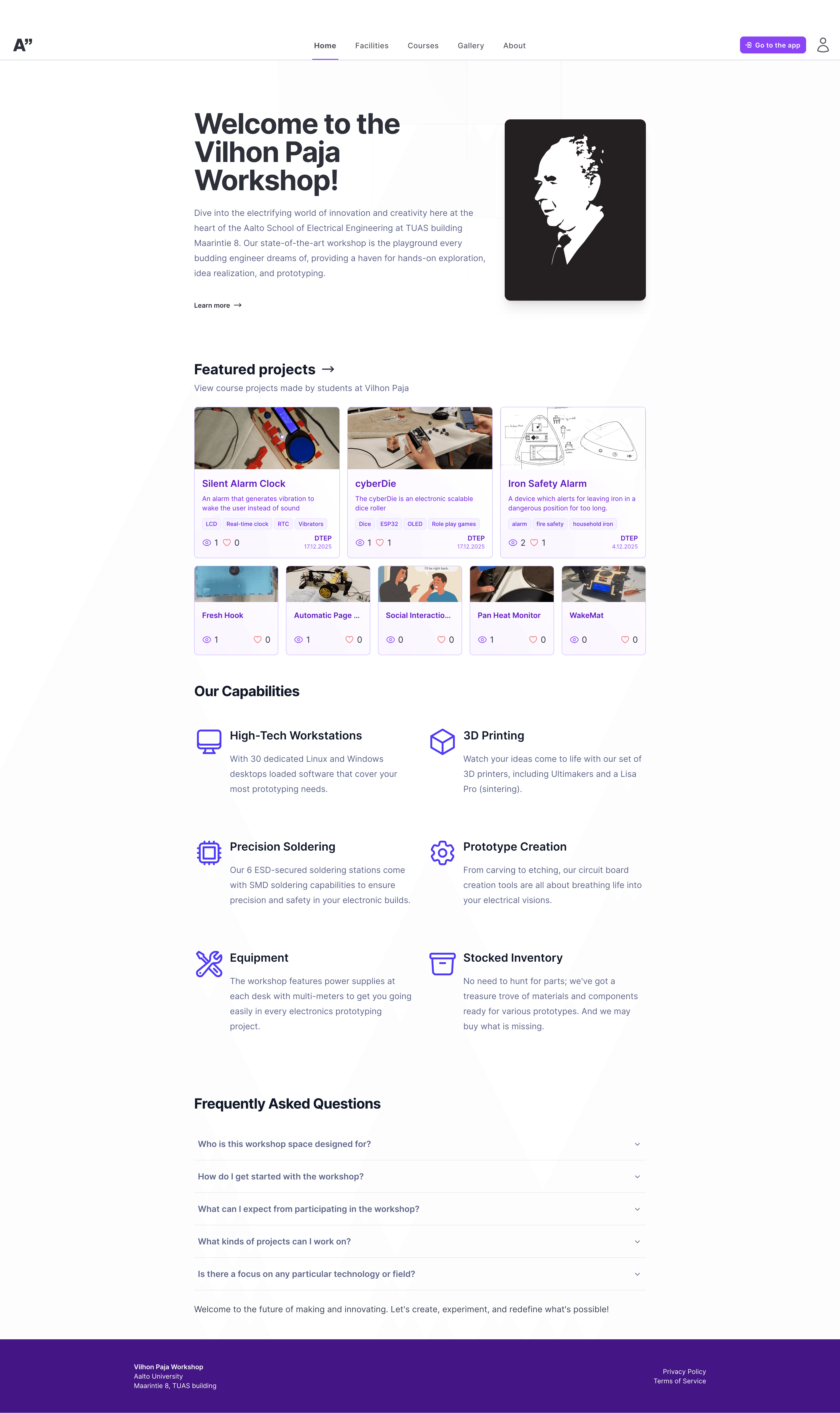
Features the workshop introduction, project cards, and capabilities summary establish what the service is and how student work is surfaced.
Project gallery
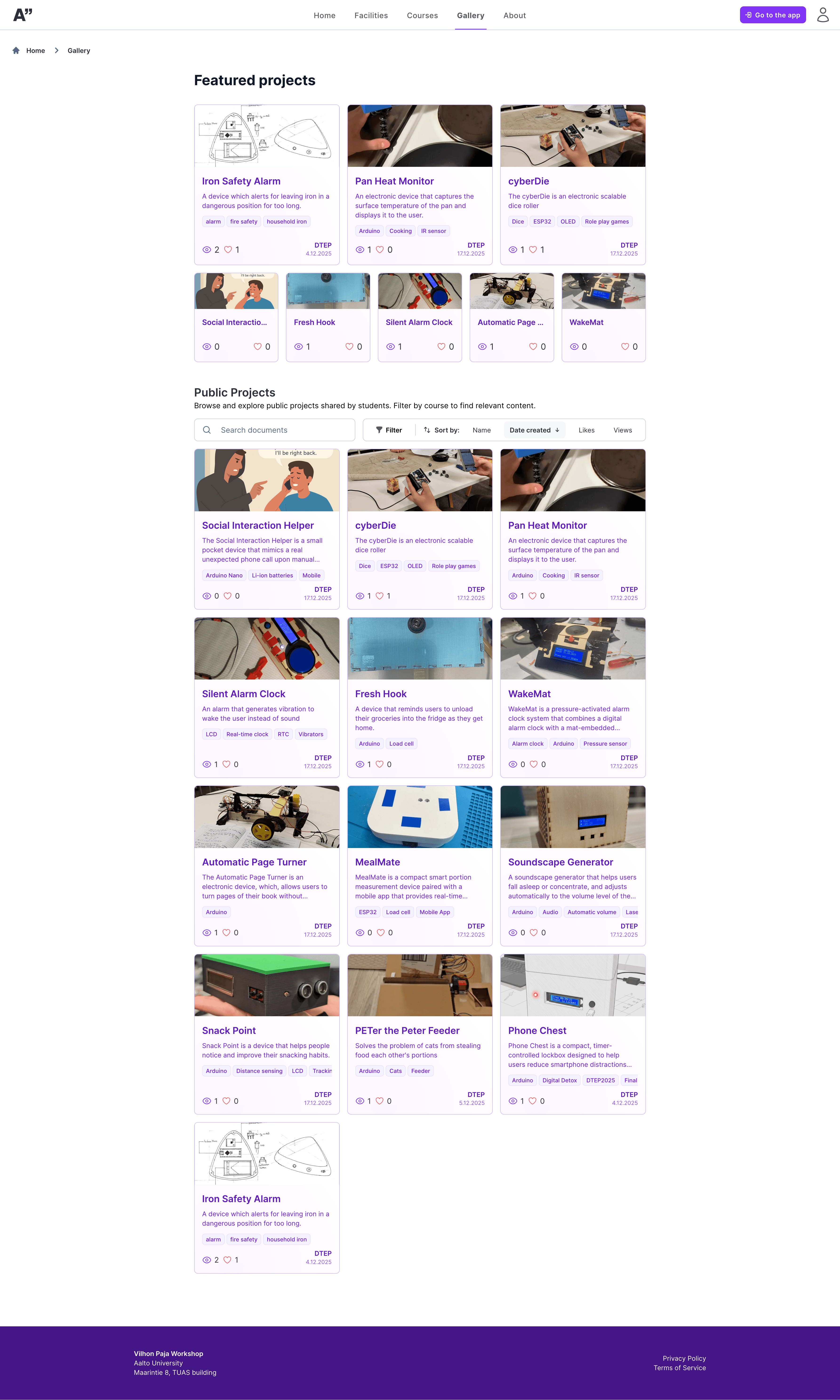
The key area is the transition from featured projects into the searchable public projects grid, where discovery, scanning, and project publishing are most visible.

Project detail
A brief demonstrate on how the project is displayed for interested audience.
Dashboard
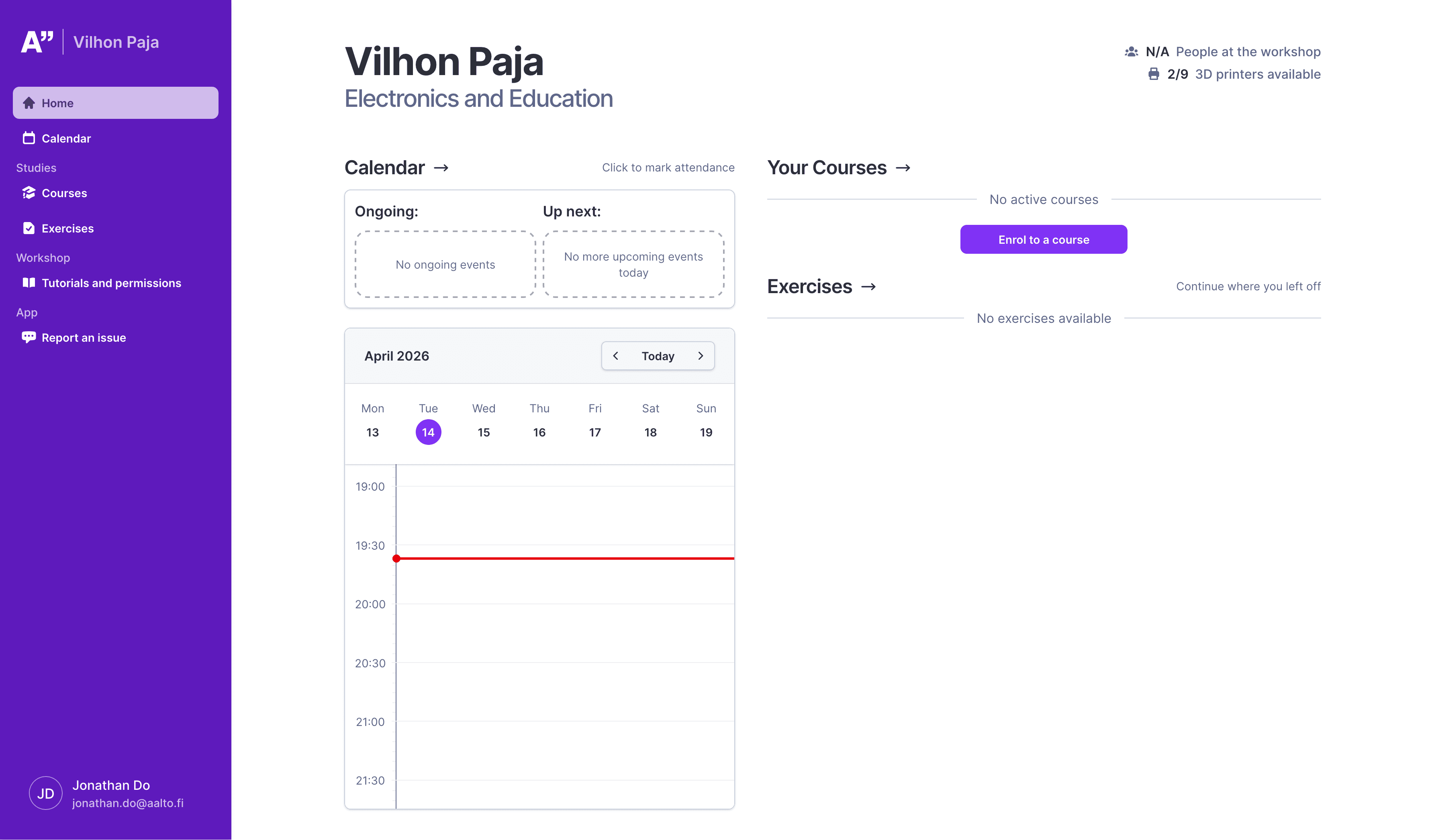
Includes left-side navigation, central calendar, and course and exercise panels.